Is the Zestimate Accurate in Cobb County? What Zillow's Own Numbers Say
Real Estate Pricing & Market Analysis
Real Estate Pricing & Market Analysis
Deborah Morton, Managing Partner, The Agency Atlanta. RealTrends Top 1.5%.
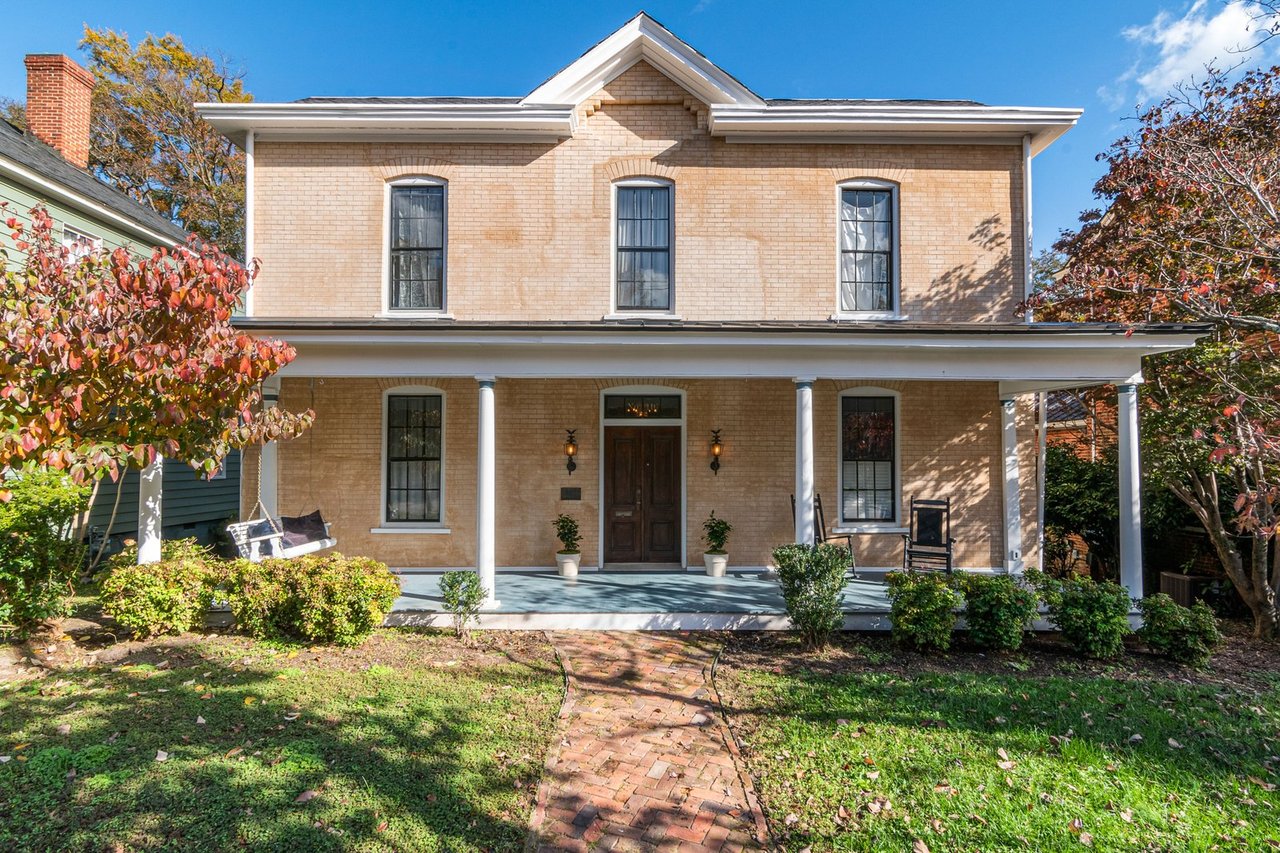
The Zestimate is a reasonable starting point for a Cobb County home, and Zillow's own numbers show why it is only a starting point: for homes that aren't listed for sale, Zillow reports a nationwide median error of 7.21%, which means half of those estimates miss the eventual sale price by more than that. You can see why on a single walk west from the Marietta Square along Whitlock Avenue, where a National Register historic district runs from small working houses to antebellum and Victorian homes, sometimes on the same block.
An estimate built from public records and nearby sales has to treat those houses as close relatives. Anyone who has priced homes on that street knows they are barely on speaking terms. The same thing happens more quietly across Kennesaw, Marietta and West Cobb, where two houses on one cul-de-sac can share a floor plan and still be very different houses by the time a buyer walks through them.
This post is for Cobb County homeowners asking a simple question: how much should I trust my Zestimate? It covers what Zillow itself publishes about accuracy, what the Zestimate can and can't see, and how to get a number you can actually make decisions with. Plenty of people check their Zestimate with no plans to move, and that is a perfectly good reason to understand it.
Zillow publishes its own accuracy figures, which is more than most online estimate tools do. As of its October 28, 2026 refresh, Zillow reports a nationwide median error of 7.21% for off-market homes, meaning homes that are not currently listed for sale.
Median is the word doing the heavy lifting. A 7.21% median error does not mean every Zestimate is off by 7.21%. It means half of off-market Zestimates land within 7.21% of the eventual sale price, and the other half miss by more, either high or low. Zillow refreshes these figures regularly, so the number drifts a little over time.
Two details on Zillow's page matter for Cobb County owners. First, until the day you list, your house is an off-market home, so the off-market figure is the one that applies to the number you are looking at today. Zillow says estimates tend to be more accurate once a home is listed, because the model can then use the list price and listing details.
Second, Zillow's regional table breaks out metro Atlanta. As of the same refresh, the off-market median error there is 6.66%, a little tighter than the national figure, and about 1 in 3 off-market Zestimates in the metro missed the sale price by more than 10%. Metro Atlanta covers far more ground than Cobb County, so treat that as a regional guide, not a Cobb number.
Here is the math on round numbers. These are illustrations, not Cobb County prices.
Illustrative home value | 7.21% of that value | Range if the miss were exactly 7.21% |
|---|---|---|
$400,000 | $28,840 | $371,160 to $428,840 |
$600,000 | $43,260 | $556,740 to $643,260 |
$800,000 | $57,680 | $742,320 to $857,680 |
On a $600,000 house, that band is $86,520 wide, and half of off-market estimates fall outside it. That is a lot of room for a decision as big as selling a house, or even deciding whether to.
Zillow describes the Zestimate as a neural network model that draws on county and tax assessor records, direct feeds from multiple listing services, and details homeowners submit themselves. It weighs home characteristics such as square footage, bedrooms and bathrooms, along with prior sales, tax assessments and market trends.
One line on Zillow's page explains a lot: the model uses data from an area as large as a county, not just your neighborhood. That breadth is a strength where sales are thin. It is also how a home near Kennesaw Mountain and a home across the county can start to look like twins on paper.
Zillow also leaves foreclosure sales out of the calculation, since those tend to sell at a discount, and it says the Zestimate is meant to track the market rather than drive it. In other words, it is trying to describe prices, not set them.
No, and Zillow says so plainly: the Zestimate is not an appraisal and can't be used in place of one. Zillow notes that most lenders rely only on professional appraisals, which are done by licensed appraisers who visit the property.
A federal appeals court landed in a similar place in 2019, describing Zestimates as opinions rather than statements of fact. Zillow's own advice lines up with that. It encourages buyers, sellers and homeowners to pair the Zestimate with a visit to the home, a professional appraisal, or a comparative market analysis from a real estate agent.
Mostly the things you can only learn by standing in the house or walking the lot. Public records describe a home in numbers, and buyers pay for what the numbers leave out.
Zillow states that unreported additions, updates and remodels aren't reflected in the Zestimate. To a public record, a kitchen redone last year and a kitchen last touched when dial-up felt fast are the same kitchen. So are a new roof and a tired one, a replaced heating and air system and the original, and fresh hardwoods versus carpet with a long memory. Buyers notice every one of those, usually in the first five minutes.
County records list acreage. They don't say whether that half acre is a flat, usable backyard or a steep wooded slope, whether a creek runs along the back line, or whether the house backs up to a busy road. In parts of West Cobb and Kennesaw, lots can change character from one street to the next, and buyers notice that too. Our West Cobb home value guide goes further into how location and lot shape value there.
A finished basement can add real living space. Whether the model counts it depends on the record. If the finished space never made it into the county's data, the Zestimate has no way to see it. Permits matter here for buyers as well as for the record, and our guide to finishing a basement in Cobb County covers permits, egress and resale in detail.
Back on Whitlock Avenue, the National Park Service's description of the district covers historic houses ranging from small working homes to antebellum and Victorian mansions. When a house has few true matches nearby, the model has less to learn from. Zillow says as much in its own words: accuracy depends on the depth and quality of the data available. Custom builds, homes on unusual acreage and older houses with decades of additions face the same challenge anywhere in the county.
In neighborhoods where the homes are alike. A subdivision where one builder put up similar floor plans over a few years gives the model plenty of close matches, and each recent sale tells it a lot about the next one.
That lines up with what homeowners say on popular real estate forums. The common view is that the Zestimate holds up reasonably well in look-alike neighborhoods and wanders when a house has been updated, neglected or customized. Zillow makes the same point more formally: when more recent sales and detailed home information are available, Zestimates generally line up more closely with sale prices.
Not as a rule that anyone has documented. A median error counts misses in both directions, and the Zestimate runs high for some homes and low for others. What is true is that the model can only count what it knows about. A house with unrecorded updates is more likely to look low, and a house that needs work the records can't show is more likely to look high.
If your Zestimate looks low, the first thing to check is whether Zillow has the right facts about your home. If it looks high, enjoy the moment, then read on.
This part is my own view, from years of pricing homes across Cobb County.
Over the years, I have seen a remarkable amount of variance between online estimates and what homes actually sell for, in both directions. And I find that people put more stock in the Zestimate than it was ever built to carry. That isn't a knock on Zillow. Zillow, Redfin and others publish a lot of useful data, and data is helpful. It just works best as guidance in a decision, not as the decision itself.
There are more online valuation tools every year, and more of them run on AI. None of them can touch, feel or smell a home. They can't see the neighbors' houses or take the drive down the street. They don't notice the power lines over the backyard, and they can't hear the traffic from the road behind the fence.
The way I think about it, pricing a home is part science and part art. The data is the science. The art is the sale itself: how a home is prepared, positioned and priced against the homes it will actually compete with the week it goes on the market. That second half is where local judgment comes in, and it's the part no algorithm has figured out how to do.
Treat the Zestimate as a first draft and add the details it can't see. Here are four steps, roughly in order of effort.
Whatever method you use, the honest answer to "what is my house worth?" is a range, and the range gets narrower the more someone knows about the actual house. And if the number turns out higher than you expected, staying put is still a perfectly good plan. Knowing what you have is useful whether or not you ever list.
As of its October 28, 2026 refresh, Zillow reports a median error of 7.21% for off-market homes nationwide and 6.66% for metro Atlanta. The Zestimate tends to be closest where homes are similar, and it can miss condition, updates and lot differences.
Zillow says unreported additions, updates and remodels aren't reflected in the Zestimate. Checking your home facts on Zillow can help, and a comparative market analysis accounts for condition directly.
No. Zillow states the Zestimate is not an appraisal and can't be used in place of one, and it notes that most lenders use only professional appraisals.
Zillow refreshes Zestimates for most homes multiple times per week and updates its published accuracy figures regularly.
A comparative market analysis from a local agent, or an appraisal, looks at the actual home and recent nearby sales rather than records alone.
If you'd like to see your home the way a buyer will before you decide anything, the free Home Report Card is a pre-listing walkthrough checklist for exactly that.
Checked November 3, 2026.
Start Your New Home Search Now!
Stay up to date on the latest real estate trends.
Real Estate Pricing & Market Analysis
Cobb
Cobb County
Cobb County
You’ve got questions, and we can’t wait to answer them.